


Dr. Arindam Bhadra
Director
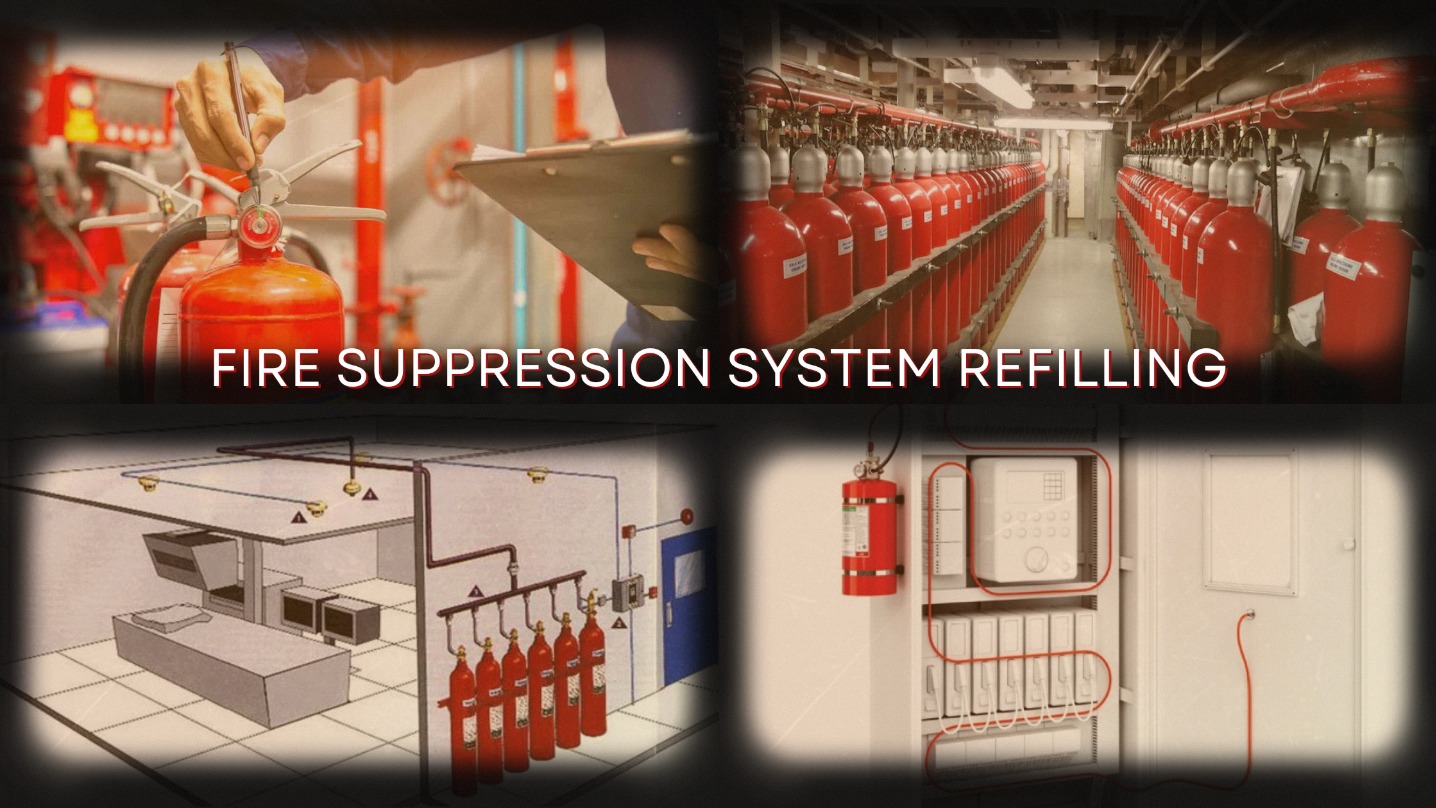
Fire suppression systems are crucial for protecting lives and property from fire hazards. The National Fire Protection Association (NFPA) 17 and 17A set the standards for dry chemical and wet chemical fire suppression systems, respectively. Proper refilling and maintenance of these systems are essential to ensure their effectiveness in an emergency.
This guide will walk you through NFPA 17 and 17A fire suppression system refilling standards, compliance requirements, and best practices to help businesses stay prepared and compliant.
What Are NFPA 17 & 17A Standards?
The NFPA 17 and NFPA 17A standards are designed to regulate the installation, inspection, maintenance, and refilling of fire suppression systems.
NFPA 17: Covers dry chemical fire suppression systems used in industrial, commercial, and hazardous environments.
NFPA 17A: Covers wet chemical fire suppression systems mainly used in commercial kitchens.
Both standards outline strict guidelines for the refilling and servicing of fire suppression systems to ensure reliability.
Who is responsible for maintenance?
The owner is responsible for the inspection, testing, maintenance, and recharging of the fire extinguishing system. However, this responsibility can be transferred to another party with written agreement.
When Should a Fire Suppression System Be Refilled?
According to NFPA 17 & 17A, fire suppression system refilling is required in the following cases:
After System Discharge – If a fire suppression system is activated, it must be refilled before it can be used again.
During Routine Maintenance – Periodic servicing includes checking agent levels and refilling if necessary.
If a Leak or Damage is Detected – Any leaks, clogs, or damaged components require immediate refilling and repair.
When the Expiration Date is Reached – Suppression agents degrade over time and need periodic refilling.
NFPA 17 & 17A Fire Suppression System Refilling Standards
1. Dry Chemical Fire Suppression Systems (NFPA 17)
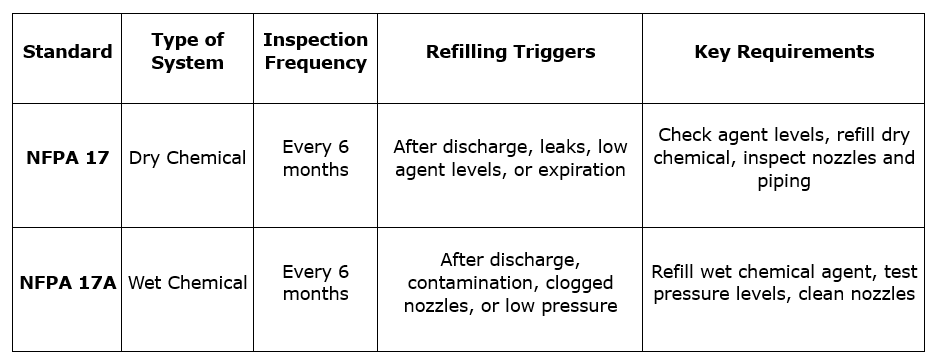
NFPA 17 specifies that dry chemical suppression systems should be inspected and serviced semi-annually. The refilling process includes:
Checking for agent leakage or depletion
Ensuring proper pressure in the system
Refilling dry chemical agent (sodium bicarbonate, potassium bicarbonate, or monoammonium phosphate)
Replacing faulty discharge nozzles, piping, or seals
Conducting a system re-test after refilling
2. Wet Chemical Fire Suppression Systems (NFPA 17A)
Wet chemical systems are commonly used in commercial kitchens and must be inspected every six months. Refilling involves:
Ensuring the correct amount of wet chemical agent is present
Checking for clogged nozzles or faulty detectors
Refilling the agent and pressurizing the system
Conducting a function test after refilling
3. Compliance and Documentation
Both NFPA 17 and 17A require businesses to maintain detailed service records, including:
Date of refilling
Type and amount of suppression agent used
Name of the service provider
System test results
Failure to maintain records can result in fines and compliance issues.
Table: NFPA 17 & 17A Refilling Standards Summary
Step-by-Step Fire Suppression System Refilling Process
1. Inspection & Assessment
Conduct a visual inspection of the suppression system.
Check for any leaks, corrosion, or physical damage.
Verify that system components are functioning correctly.
2. Discharge & Cleaning
If required, discharge the remaining suppression agent.
Clean the suppression system components.
3. Refilling the System
Refill with the appropriate fire suppression agent (dry chemical or wet chemical).
Ensure that the correct concentration and volume are used.
4. Re-pressurization & Testing
Pressurize the system according to manufacturer and NFPA specifications.
Conduct a functionality test to verify the system operates correctly.
5. Documentation & Certification
Log the date, service details, and technician information.
Provide the customer with a service certificate to ensure compliance.
Importance of Hiring a Certified Fire Suppression Service Provider
Hiring a licensed and certified fire suppression system technician ensures:
Compliance with NFPA 17 & 17A regulations
Proper handling and refilling of suppression agents
Safety for employees and property
Avoidance of fines due to non-compliance
Always choose a reputable fire suppression company with trained professionals.
Common Challenges in Fire Suppression System Refilling
Refilling fire suppression systems can present challenges, such as:
Incorrect agent refill – Using the wrong suppression agent can render the system ineffective.
Clogged or faulty nozzles – Blocked nozzles prevent proper agent discharge.
Pressure loss – An improperly pressurized system won’t activate correctly in a fire.
Failure to test the system – A refilled system must be tested to ensure it functions properly.
Conclusion
Proper refilling of fire suppression systems in compliance with NFPA 17 & 17A is essential for safety and legal compliance. Regular inspections, timely refilling, and working with a certified fire suppression service provider can help prevent fires and protect property.
By staying compliant with NFPA fire suppression system refilling standards, businesses can ensure their fire safety systems work efficiently in case of an emergency.
General refilling standards
After discharge: A system must be refilled after it has been activated.
Trained personnel: Only individuals who are properly trained shall be competent to design, install, and service pre-engineered wet chemical systems.
Manufacturer's manual: All refilling procedures must follow the manufacturer's design, installation, and maintenance manual, which is considered part of the system's listing and requirements.
System readiness: A system must be recharged if an inspection shows it is not in a "ready condition".
Regular inspection: Semi-annual inspections are required for suppression systems, which may trigger the need for a recharge if a problem is found.
For further assistance, consult the following National Fire Protection (NFPA) standards:
NFPA 12, Standard on Carbon Dioxide Extinguishing Systems
NFPA 12A, Standard on Halon 1301 Fire Extinguishing Systems
NFPA 17, Standard for Dry Chemical Extinguishing Systems
NFPA 17A, Standard for Wet Chemical Extinguishing Systems
NFPA 750, Standard on Water Mist Fire Protection Systems
NFPA 2001, Standard on Clean Agent Fire Extinguishing Systems
About me:
Dr. Arindam Bhadra is a Fire safety consultant & ISO Auditor based in Kolkata, India, with over 20 years of experience in Fire safety systems, Video Surveillance, Access Control and BMS. He is founding director of SSA Integrate.
Dr. Arindam Bhadra is popularly known as "Fire ka Doctor" because of his expertise in fire safety, prevention and awareness, helping people and organizations stay safe from fire hazards.
He is Member of NFPA, Conformity Assessment Society (CAS), FSAI, Institution of Safety Engineers (India), The Institution of Engineering and Technology etc. He is certified fire Inspector, Certified Fire Protection professional and Certified ToT from CLI.
He is guest faculty at BIS - BUREAU OF INDIAN STANDARD, DGFASLI – CLI (CENTRAL LABOUR INSTITUTE) and Institution of Safety Engineers (India).

Director


Maharashtra has written the world’s most practical fire-monitoring rule. The question now is whether building owners will read it properly.

Installing a fire system is easy. Keeping it alive is the real engineering. Because a fire never sends a warning — and when it comes, your system gets one chance to work. At Northern Star Engineering, that chance is now in your pocket.