Pradeep Sahu, AGM, MEP (Mech.), Tata Projects Ltd.

India’s First Underground Metro Railway Station foundation was laid in year 1972, 29th December in Kolkata and commissioned for commercial services on 1984, 24th October for a stretch of 3.4 kms. from Esplande to Bhowanipur (Now Netaji Bhavan)
Today we see maximum states of India do have Metro Rail Services for easy commuting. India’s growth is so rapid that people’s and properties safety should not be ignored or diluted at any compliances rather it should be focused.
PROTOCOL
• C: Confine| A: Alarm| R: Rescue| E: Extinguish and Evacuate
• Analyze fire risk and behavior.
• Evacuation strategy & analysis
• Tunnel Safety
• DesignFireProtectionSystemwithNew Technology
• Qualitative and Quantitative Fire Risk Assessment
STANDARDS AND CODES
NBC-2016 : National building code of India
BIS Code : Bureau of Indian Standards
IS:15105 : Design and Installation of Fixed Automatic Sprinkler Fire Extinguishing Systems
IS 2189 : Selection, Installation and Maintenance of Automatic Fire Detection and Alarm System
IS 15683 : Portable Fire Extinguishers
BS : British Standards
EN : European Standards
NFPA-10 : Standard for Portable Fire Extinguishers
NFPA-13 : Standard for the Installation of Sprinkler Systems
NFPA 14 : Standard for the Installation of Standpipe and Hose Systems
NFPA-20 : Standard for the Installation of Stationary Pumps for Fire Protection
NFPA-22 : Standard for Water Tanks for Private Fire Protection
NFPA-72 : National Fire Alarm and Signaling code
NFPA-101 : Life Safety Code
NFPA-130 : Standard for Fixed Guideway and Passenger Rail System
NFPA-2001 : Standard on Clean Agent Fire Extinguishing Systems
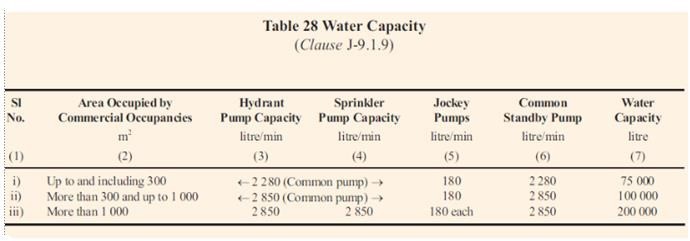
NBC 2016 PART IV FIRE & LIFE SAFETY ANNEXURE J
INTEGREATION OF FIRE SAFETY EQUIPMENT
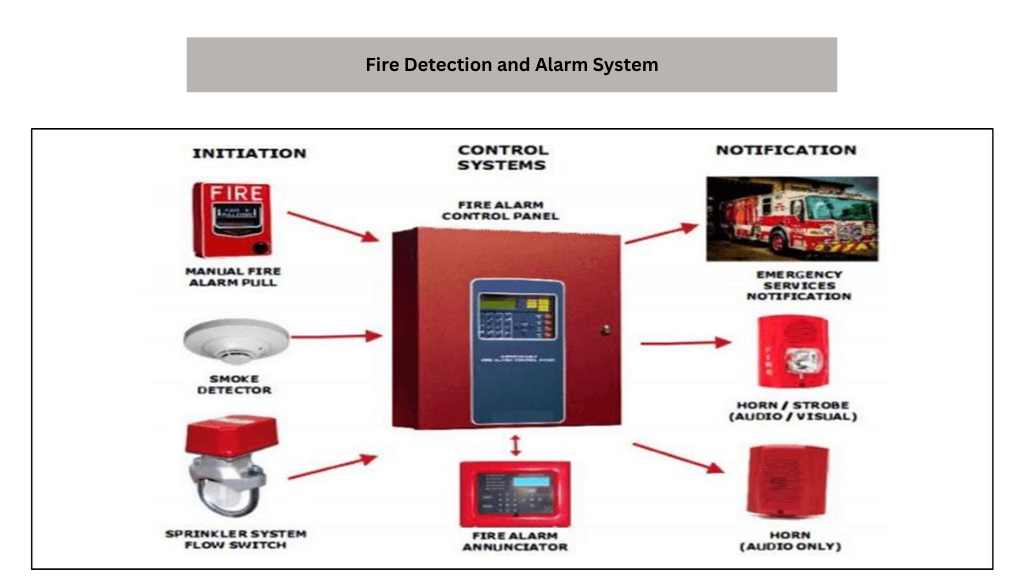
RISK IN TUNNELS
Prevention: Limit the probability of occurrence of an incident.
Mitigation: Limit the consequences of an incident when it occurs.
Evacuation: Allow the protection and evacuation of people (passengers, staff).
Rescue: Promote the intervention of emergency (alarm, evacuation pathway, means of firefighting).
Security measures combine to produce a low level of residual risk.
SYSTEM DESIGN
Underground metro station with construction of non-combustible materials, are classified under fire hazard as :
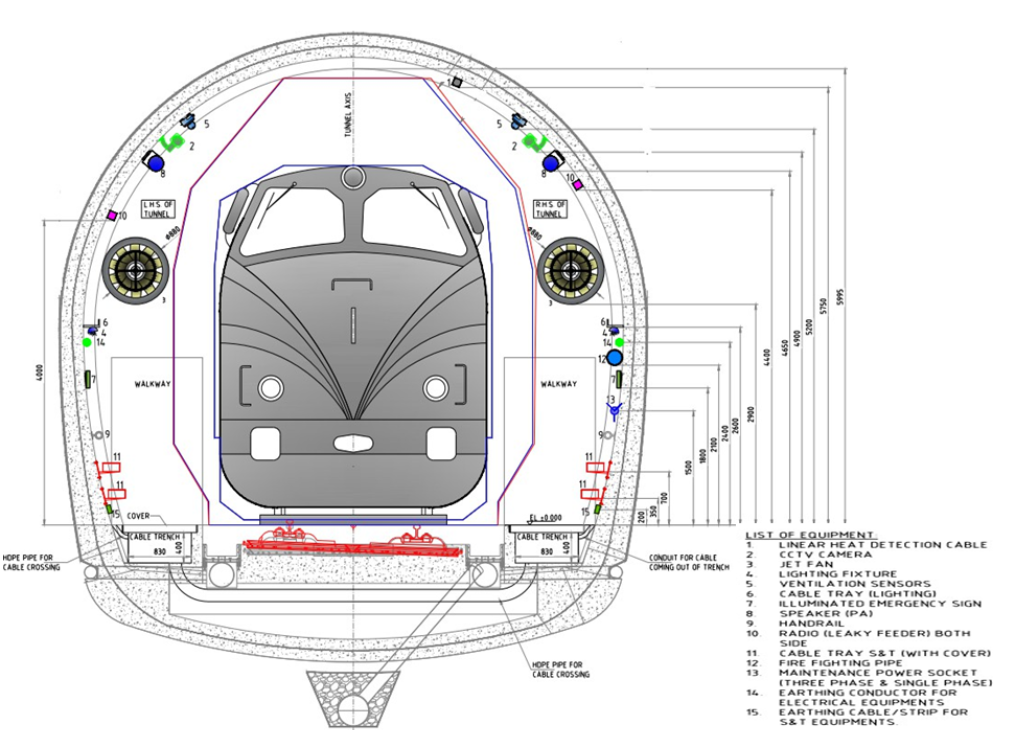
TUNNEL FIRE SAFETY INTEGRATION
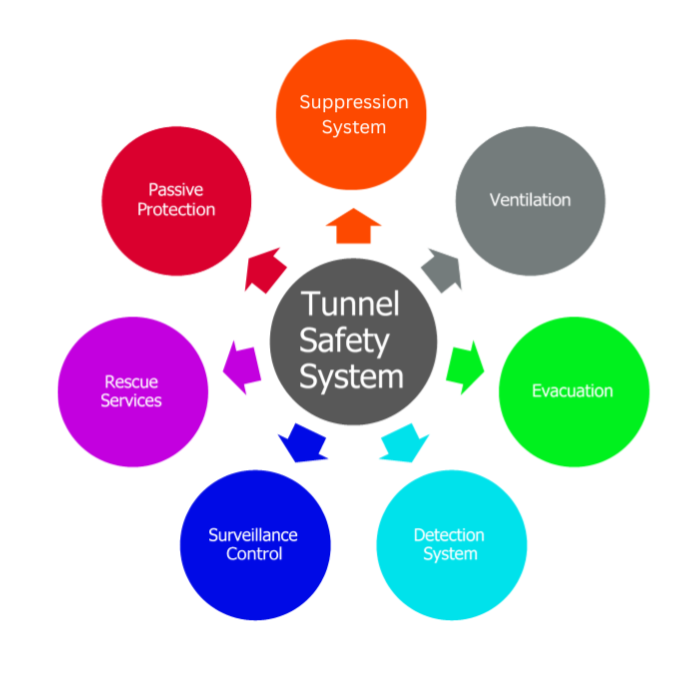
Group-D-7 Assembly as per NBC 2016-part 4 Fire, clause 3.1.5
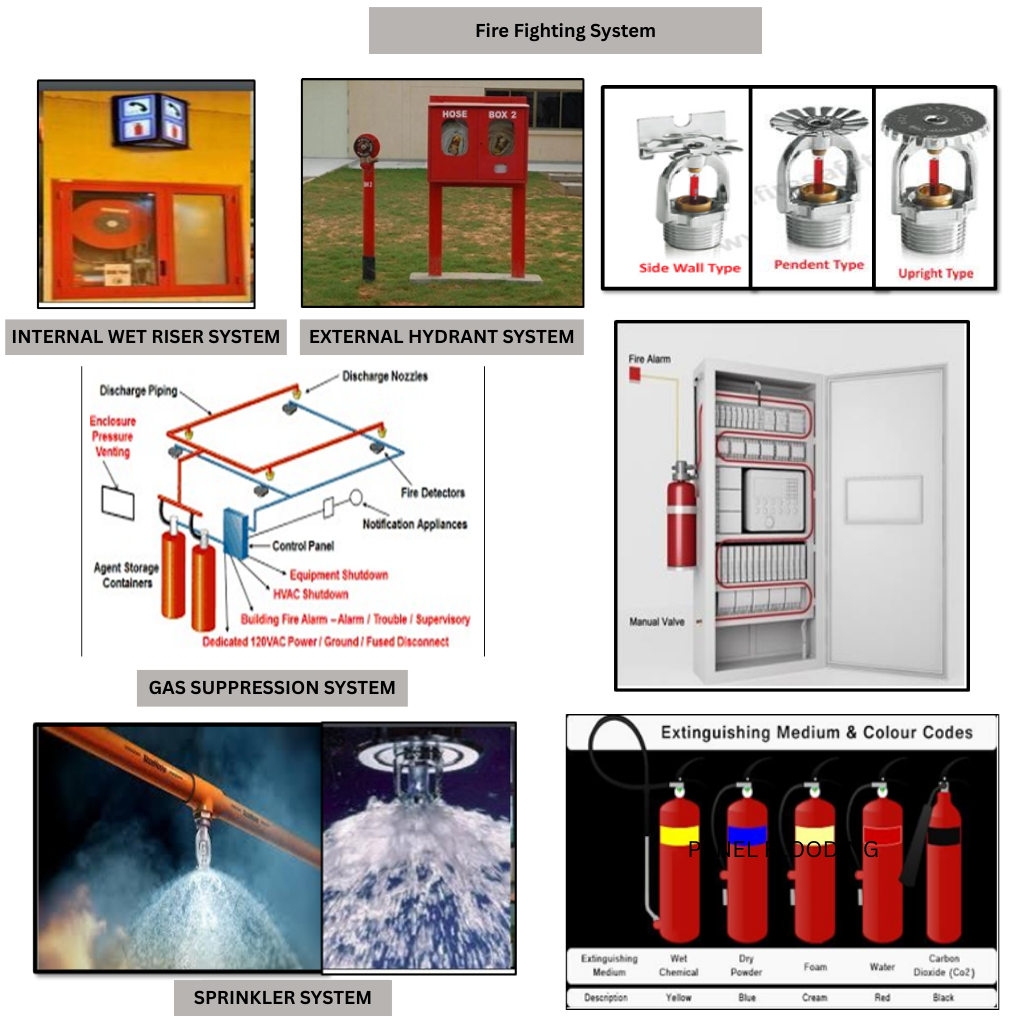
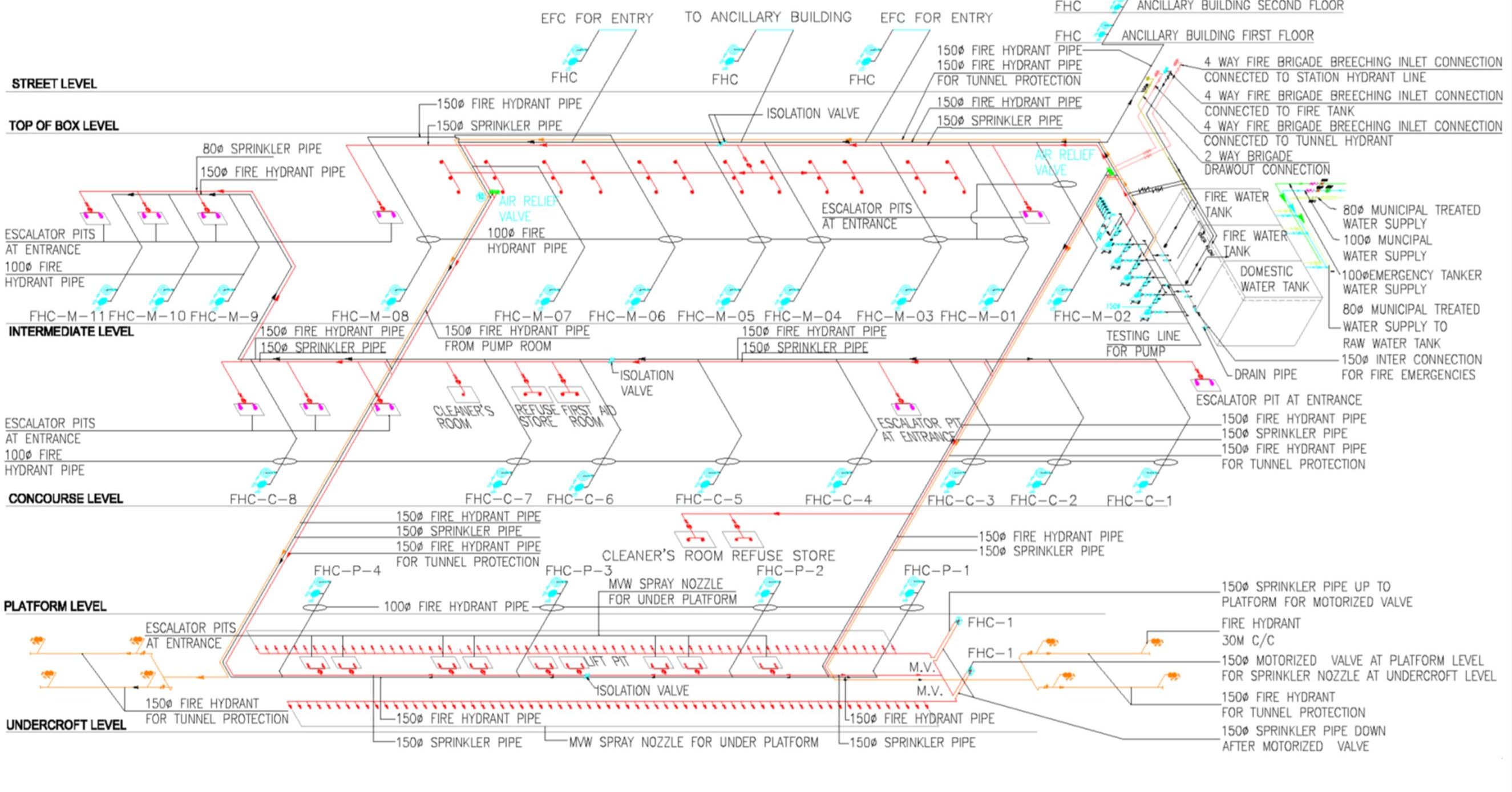
Placement of Internal Single Headed Hydrants near each escape staircases.
Internal Single Headed Hydrants at platform level 30m c/c interval and concourse level at 45m c/c intervals.
Placement of Internal Hose cabinets with hoses and branch pipe.
Each hydrant valve having a flow switch are synced into the fire alarm panel.
Placement of Thermoplastic Synthetic First Aid Hose Reels at Station and Entry/Exit areas.
Sprinkler protection are provided in Concoures Levels, Ticketing Room, Trash Room and Store Room, Refuse area, etc.
Automatic
Medium Velocity Water Spray System are provided to cool and control the Fire in Under Carriage of Rolling stock in case of over heating or emergency.
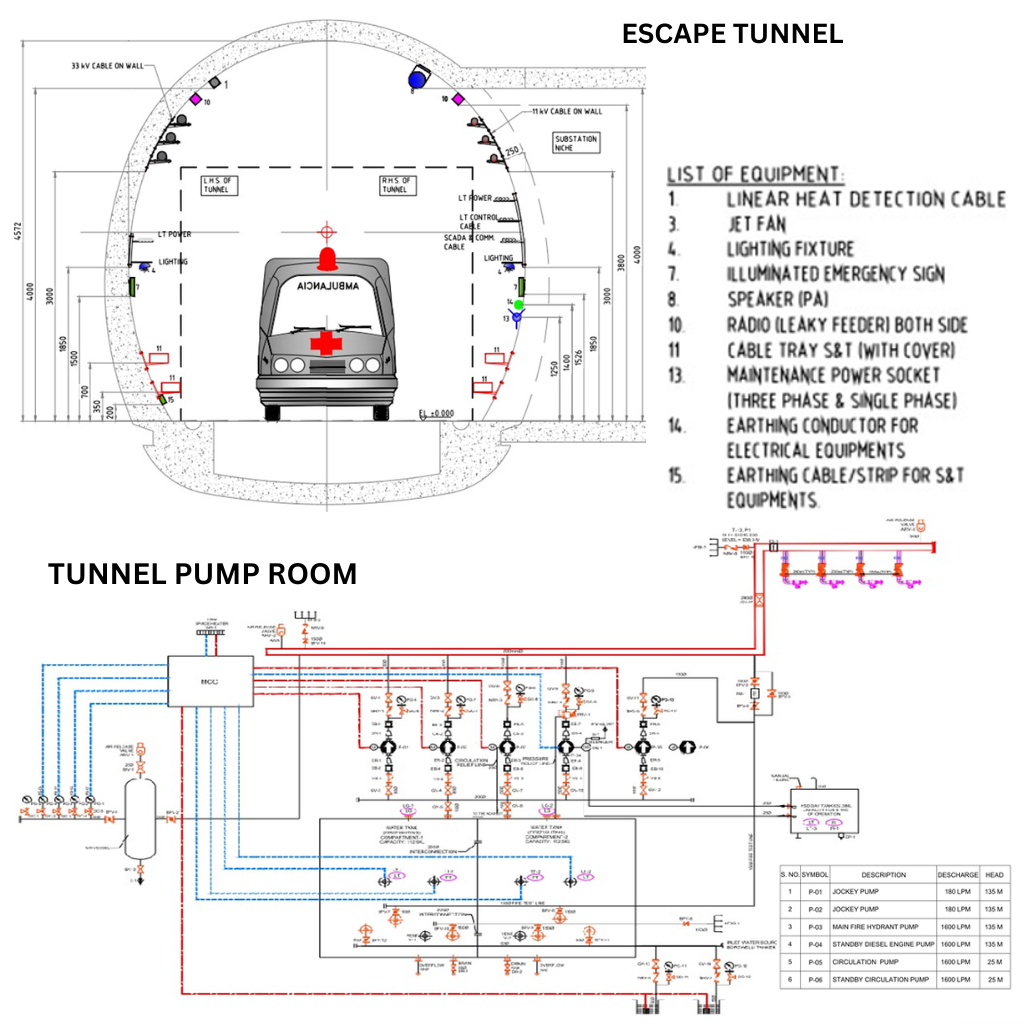
Tunnels are protected with Double Headed Hydrants at every 30 meters c/c interval. For the purpose of accurate fire detection and sounding alarm, each station is divided into zones / sections namely.
i) Undercroft
ii) Platform level
iii) Concourse Level
iv) Ancillary Building
v) Spare (IF ANY)
TUNNEL FIRE FIGHTING SYSTEM
• In case of a fire (emergency case) the fire detection system has to detect the location of the fire and starts automatically the different fire programs which are implemented in the tunnel monitoring and controlling system (SCADA).
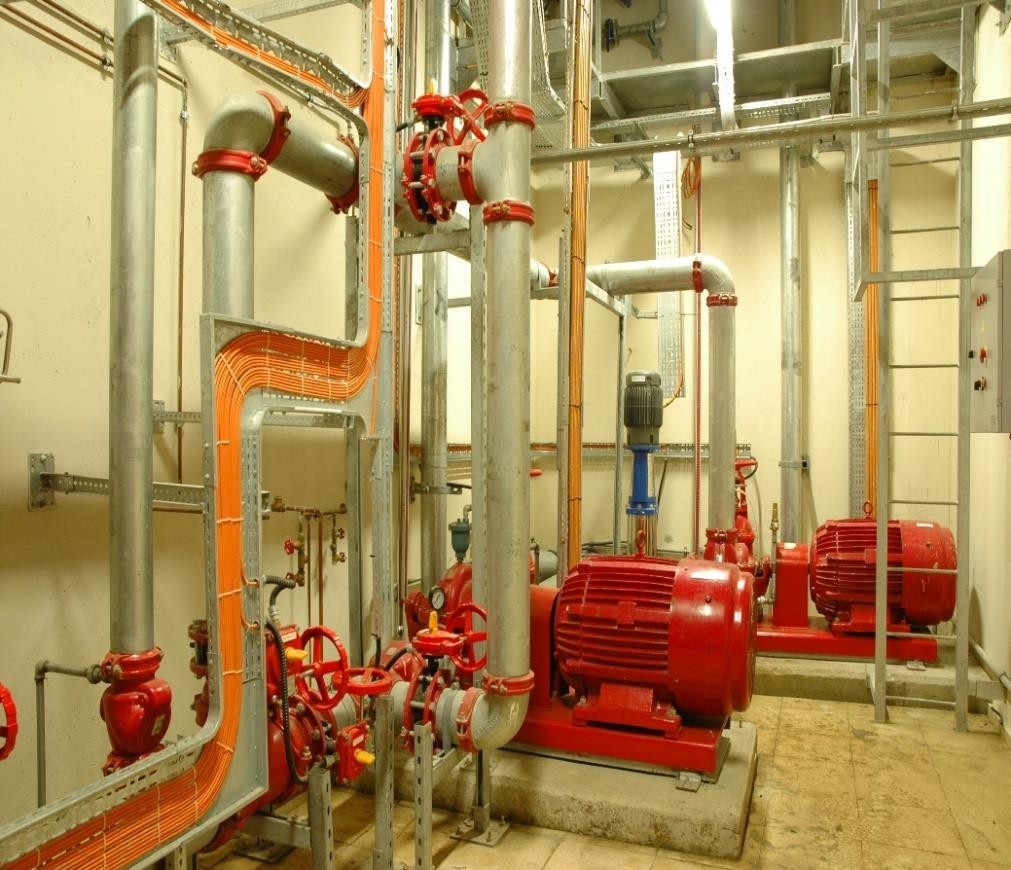
• In case of the fire different jet fans of the tunnel are activated and creates the required longitudinal air velocity of ~ 3m/s (prevent back layering of smoke), monitored by longitudinal velocity measurement sensors, to boost smoke outside the tunnel tube in driving direction to protect escaping people.
SUMMARY
If I have to summarize the whole topic in few words I would say:
• Think Safety, Not Just Shake of Compliance Only.
• Educate Your Surrounding on Fire Safety.
• Defend in Place.