


Samir Kumar Jha
General Mamger

As the General Manager Security & Fire Safety, how do you conceptualize and implement an integrated security and fire safety framework that addresses both operational efficiency and threat resilience within such a high-value environment?
The Alchemy of Security: Forging Resilience from Trust
Before addressing the core of this profound question, I must acknowledge the crucible that forged this philosophy. My journey through the industrial belt, hospitality, and CBRE was not merely a career path; it was a pilgrimage to understand the essence of end-to-end responsibility. I was searching for the ultimate canvas.
That canvas revealed itself on May 5th, 2011, at the Bharat Diamond Bourse. My first and non-negotiable demand to the Board was not for a larger budget or more personnel, but for a fundamental paradigm shift: to transform "Security" into the Department of Security & Fire Life Safety. They entrusted me with this vision, and we began an alchemical process we fused the disparate elements of Physical & Electronic Security, Fire, Safety, Medical, VIP Events, Liaison, Investigation, Elevator Operations, and even Sports under a single, sovereign umbrella.
The Philosophical Blueprint: Unity Over Silos
The framework is not a checklist of procedures; it is an organizational doctrine. Unity is resilience. By dismantling operational silos, we did not just create a department; we engineered a single, cohesive nervous system for the entire Bourse. This integration is the very bedrock of both operational efficiency and threat resilience.
Operational Efficiency is born from Synergy: When fire safety protocols inform physical access control, and medical response teams train with security personnel, redundancy evaporates. Actions become concurrent, not sequential. Decision-making is centralized, and response is instantaneous.
Threat Resilience is born from Adaptability: A monolithic system is brittle. An integrated system is fluid. Our framework allows the entire organism to flex and adapt, ensuring that a failure in one node is instantly compensated for by the strength of the entire network.
The Mentor's Influence
The success of this integrated approach has been significantly bolstered by the guidance of our esteemed mentors: Mr. Shirish Inamdar ji, Shri Bajrang Khade ji, and most notably, Shri D. Sivanandhan ji, (Ex-DGP Maharashtra & Commissioner of Police Mumbai). Their roles as mentor, philosopher, and guide were instrumental in shaping the DSFS into the robust department it is today.
The Human Core: Eradicating Fear to Forge Assets
The most critical vulnerability in any high-value environment is not a technological gap, but a human one: the culture of fear. We identified that the fear of losing one's job was the single greatest point of failure. We systematically eradicated it.
Our philosophy is starkly clear: Follow the SOPs and be humble with all members. We instilled the conviction in our team that we stand behind them. A mistake is not a terminal event; it is a learning moment. This psychological safety transformed our personnel from liabilities fearing reprisal into confident assets taking ownership.
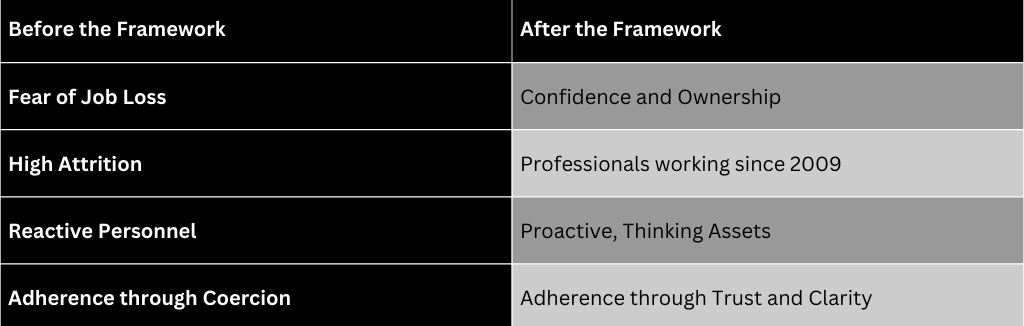
This cultural masterstroke, where Honesty, Integrity, and Professionalism are non-negotiable, created an unbreakable spine for the organization. Low attrition is not an HR metric; it is the source of our institutional memory and operational excellence.
The Ultimate Test: Becoming Partners in Business
A framework's true mettle is tested not in routine, but in chaos. During the COVID-19 pandemic, our integrated doctrine faced its ultimate trial. Our team did not retreat; they became the fortress. Stationed within the Bourse for 18 months, they transcended their security mandate.
They became the partners of business operations, ensuring the uninterrupted flow of import and export in a nation under lockdown. This was not just threat resilience; this was business continuity incarnate. We were no longer a cost center protecting assets; we were the vital organ keeping the heart of the diamond trade beating.
In Conclusion: The Sovereign Department
The integrated framework is therefore a living entity. It is the manifestation of a belief that true security is not a function you perform, but a culture you build. It is built on the twin pillars of technological and operational unity and an unshakeable culture of human trust. At the Bharat Diamond Bourse, we have not just implemented a system; we have authored a new philosophy for safeguarding what matters most.
Could you elaborate on how BDB leverages advanced technologies such as AI-driven surveillance, analytics-based access control, and intelligent fire detection systems to enhance situational awareness and proactive risk mitigation?
The Sentient Shield: Technology with Foresight
We don’t “adopt” technology; we internalize it. Our maxim is simple: a reactive system is a failed system. Anticipation is the standard. We built a sentient shield a fused stack of AI, analytics, and operational intelligence that perceives, predicts, and guides action.
The Intelligent Core: Security Command & Control Centre
This is our central nervous system where signal becomes sense and decisions become coordinated action.
AI-Driven Surveillance:
More than 3,500 cameras fused into a single intelligent visual cortex.
Backed by a multi-petabyte storage and compute layer to retain history and train models.
Real-time anomaly detection: unauthorized loitering, tailgating, abandoned objects, directional anomalies, and crowd density variations.
Event prioritization funnels actionable alerts to operators with context and recommended response playbooks.
Analytics-Based Access Control:
From permissions to intent: the system correlates identity, time, role, location, escort requirements, and past behavior to create a dynamic risk profile per access request.
Micro-zoning and time-bound entitlements reduce attack surface.
Adaptive authentication thresholds escalate based on risk signals (for example, multi-factor validation, supervisor authorization).
Intelligent Fire Detection with a Digital Twin:
Live integration of fire detection grid to a CAD/BIM-based digital twin of the Bourse.
On alarm, the system pinpoints exact coordinates, nearest risers, hydrants, suppression assets, egress routes, and refuge areas.
Predictive modeling of smoke and heat spread to pre-plan evacuation, isolate elevators/ventilation, and stage responders precisely.
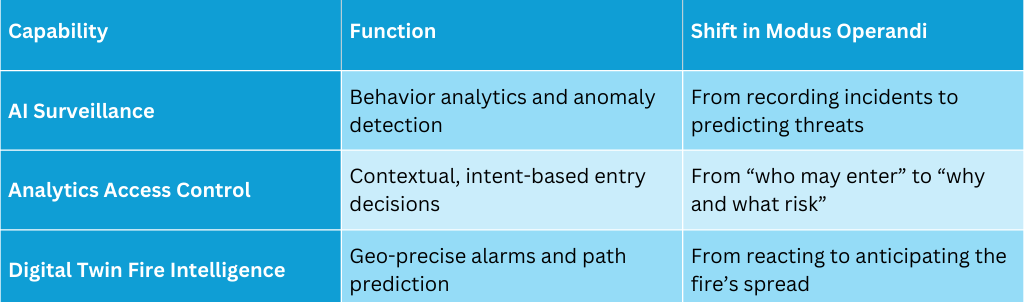
The power lies in integration. CCTV flags an anomaly, access control checks context, and if needed, the fire system prepares egress overlays. Operators see a single truth view, with decision aids that shrink response time from minutes to seconds. This is proactive security in practice.
How is the organization’s emergency preparedness structured to ensure a coordinated response to incidents? What protocols are in place for inter-agency collaboration with city fire services, law enforcement, and disaster management authorities?
Preparedness as a State of Being
At BDB, preparedness is continuousnot a plan on paper but a living discipline. We combine elite in-house capabilities, community training, and formalized inter-agency protocols validated through rigorous drills.
A Multi-Layered Response Architecture
1. Elite In-House Response
Fire Response:
Dedicated, trained fire-fighting unit with an advanced fire tender.
Immediate deployment; first-attack competence to stabilize incidents before escalation.
Medical Response:
Two advanced cardiac care ambulances, staffed by skilled paramedics.
On-scene triage, stabilization, and rapid transport protocols integrated with nearby hospitals.
2. User Preparedness and Community Participation
Mandatory Training:
Fire-fighting and first-aid training for all BDB members twice yearly.
Floor-warden and muster-lead programs for decentralized control during emergencies.
Routine Briefings:
Micro-drills, evacuation familiarization, AED and bleed-control awareness, and elevator entrapment procedures.
Documentation and SOPs:
Accessible SOP cards, visual wayfinding, and multilingual instructions to reduce cognitive load in crises.
3. Inter-Agency Collaboration: The Unity Matrix
City Fire Services:
Pre-incident planning and site orientation; hydrant and riser maps shared.
Joint inspection and compatibility checks for fittings, water supply, and access routes.
Law Enforcement:
Local Police, QRT, and Force-One for high-risk and counter-terror contingencies.
Protocols for perimeter lockdown, forensic chain-of-custody, and evidence-safe video export.
NSG and Specialized Agencies:
Site familiarization and scenario rehearsals for specialized responses.
Disaster Management Authorities:
Integrated protocols for natural hazards, hazardous material events, crowd surges, and mass-care operations.
4. Drills: The Crucible of Readiness
Regular Joint Drills:
Fire, medical, evacuation, shelter-in-place, and multi-threat scenarios.
Anti-Terror and Complex Incident Exercises:
Hostile intruder, IED, and multi-point diversion drills with law enforcement and counter-terror units.
Lessons-to-Doctrine:
After-action reviews feed back into SOPs, checklists, training curricula, and technology configurations.
Outcome: Predictable Coordination Under Stress
These layers convert chaos into choreographed response. Members, staff, and agencies operate on a common playbook. Confidence increases, response times drop, and incident outcomes improve measurably.
How does BDB cultivate a culture of security consciousness among its workforce, occupants, and stakeholders through continuous training, drills, and behavioural safety programs?
From Compliance to Culture
Security consciousness thrives when it’s cultivated, not imposed. We treat culture-building like horticulture deliberate, patient, and consistent.
Board Stewardship and Tone from the Top
The Board of Directors act as custodians of this culture, ensuring security is an organizational value, not a departmental initiative. Their support legitimizes training, drills, and enforcement reducing friction and increasing adherence.
Experience as the Bedrock
Long-tenured professionals many serving for a decade or more anchor our culture. Familiarity with rules and their rationale makes enforcement firm but fair. Users see consistency and transparency; trust follows.
The Engagement Framework
1. Continuous Training
Role-based modules for occupants, tenants, vendors, and visitors.
Recurring refreshers on fire safety, first aid, evacuation, and suspicious activity reporting.
Scenario-based microlearning to keep content relevant and memorable.
2. Immersive Drills
Participation is structured, not symbolic: floor wardens, assembly coordinators, stairwell marshals, first-aid leads.
Post-drill debriefs translate lessons into actionable improvements and personal takeaways.
3. Behavioral Safety Programs
Positive reinforcement for reporting hazards, near-misses, and process deviations.
Clear, blame-free pathways for escalation to encourage early intervention.
4. Communication and Transparency
Visual dashboards, incident summaries, and “you said, we did” updates close the loop.
Multilingual signage, QR-accessible SOPs, and quick references reduce uncertainty.
Result: Collective Ownership
When people understand their role and see their feedback shape policy, vigilance becomes habitual. The culture shifts from “security’s job” to “our shared responsibility.”
What is your vision for the future of integrated security and fire safety management in India’s large-scale commercial and financial infrastructures, and how is BDB aligning itself with these emerging global standards?
A Vision Anchored in Duty and Foresight
Robert Frost wrote of lovely, dark, and deep woods and promises to keep. That is our charge: navigate complex threats with clarity and keep our promises to protect people, assets, and continuity.
Strategic North Star: Integrated, Ethical, and Standards-Driven
Holistic Integration:
AI, analytics, and human expertise converging into adaptive ecosystems.
From static defenses to dynamic, intelligence-led protection that anticipates and mitigates risk.
Ethical and Sustainable Stewardship:
Human-centric design that respects privacy, dignity, and access equity.
Energy-efficient infrastructure, lifecycle safety, and responsible data governance.
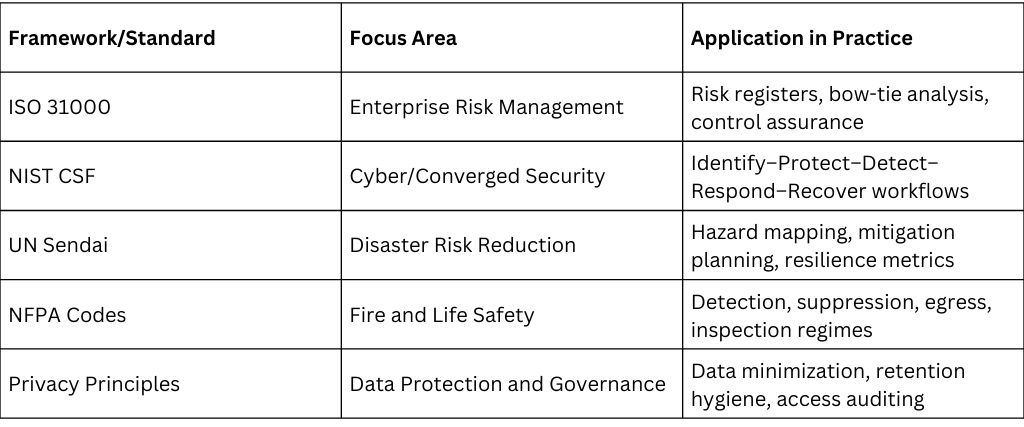
Global Standards as a Common Language:
ISO 31000 for risk management discipline.
NIST-aligned cybersecurity practices for converged security environments.
UN Sendai Framework for disaster risk reduction.
NFPA benchmarks for fire and life safety.
GDPR-equivalent privacy principles for surveillance and access systems where applicable.
BDB’s Alignment: Leading by Doing
AI-Powered Foresight:
Continued integration of AI for surveillance analytics, anomaly detection, and fire dynamics prediction.
Operator decision-support with playbooks and simulation-driven training.
Inter-Agency and Industry Partnerships:
Deepening ties with fire, police, counter-terror, and disaster authorities.
Benchmarking and peer exchanges with best-in-class facilities and standard bodies.
Culture and Capability:
Expanding role-based training with digital simulations and tabletop exercises.
Embedding continuous improvement cycles—lessons learned to doctrine so practice never stagnates.
Policy Direction and Ecosystem Impact India’s commercial hubs will benefit from codifying:
Minimum viable capabilities for integrated command centers.
Shared data models for multi-agency interoperability.
Regularized joint drills as policy, not preference.
Incentives for green safety technologies and resilience-by-design.
Closing Perspective: Miles to Go, and Ready for the Journey
Our answers across this interview form one arc: unify people and systems, anticipate through intelligence, rehearse coordination, build culture deliberately, and align with global standards. The path ahead is demanding but clear. At BDB, we will continue to transform protection into enablement and readiness into resilience, keeping our promises mile by mile.

General Mamger

Mr. Jiten Mahapatra, Vice President, ZKTeco Biometrics India Pvt. Ltd.

Nikesh Shah, Founder and Director of Ortus Automation Pvt. Ltd.
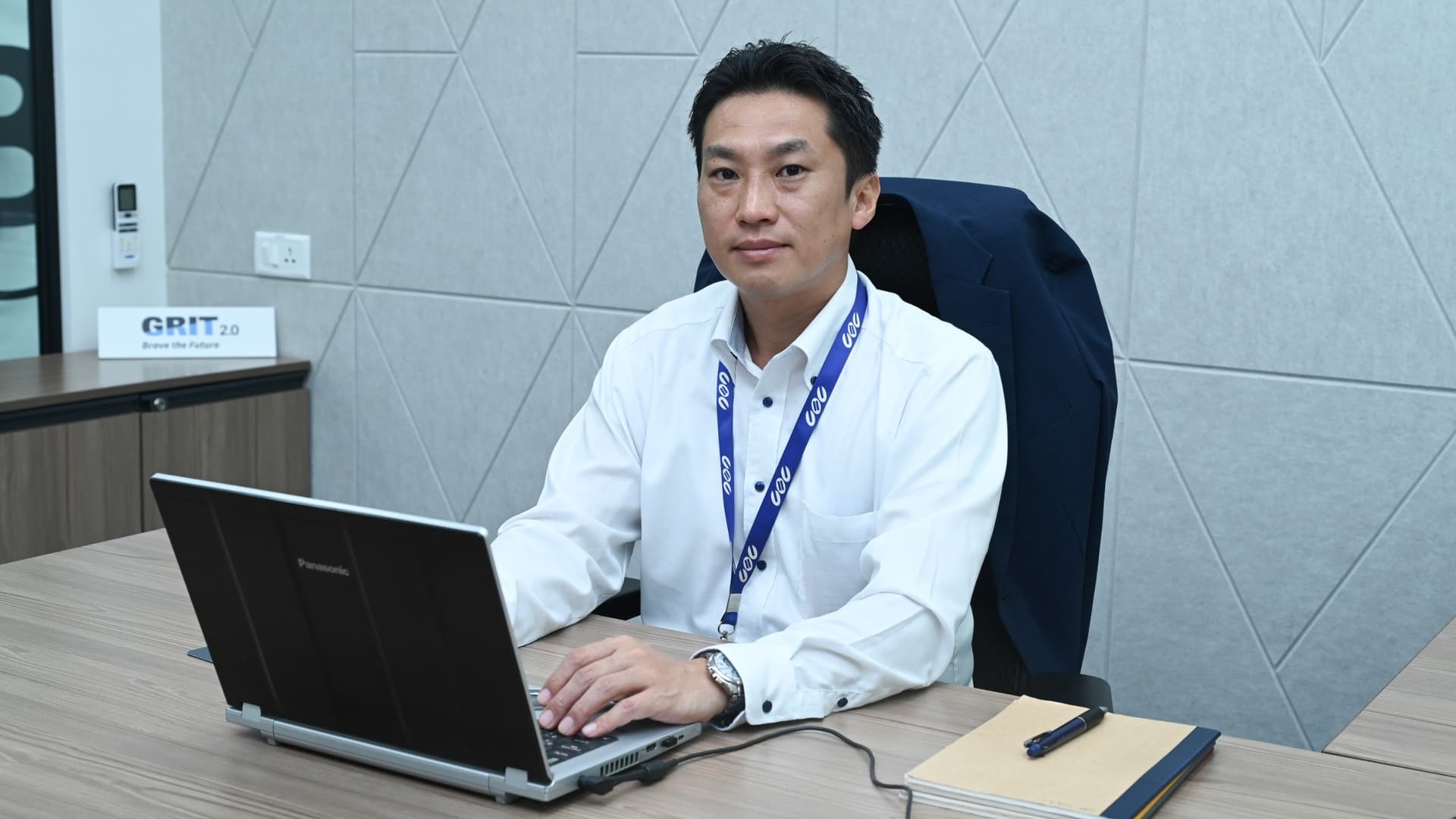
Mr. Ikuo Umeda, Executive Director, GANZ CBC Corporation India Pvt Ltd.