


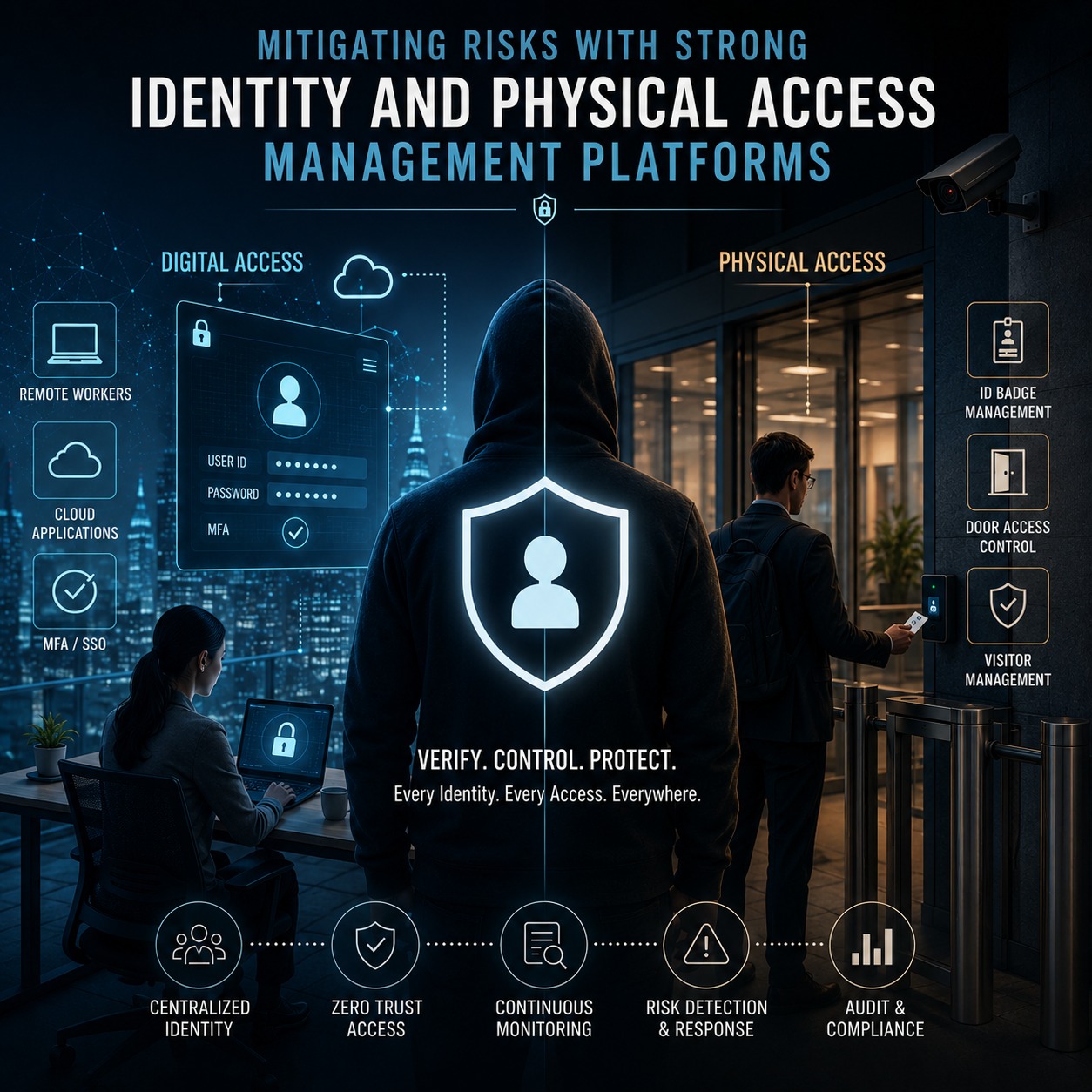
In today’s hybrid workplace where employees seamlessly shift between remote setups, co-working spaces, and corporate offices traditional perimeter defences have dissolved. Data flows across cloud platforms, personal devices, and intermittent physical sites, creating an expanded attack surface that insiders can exploit with ease. Whether through malicious intent, careless errors, or compromised credentials, these threats now blend digital and physical dimensions in ways that demand unified security strategies.
Insider threats remain one of the most persistent and costly risks facing organizations. According to the Ponemon Institute’s 2025 Cost of Insider Risks Report, the average annual cost per organization has climbed to approximately $17.4–19.5 million, a significant rise from prior years, driven by negligent behaviour, credential theft, and malicious actions. Surveys indicate that 56–77% of organizations experienced at least one insider incident or insider-driven data loss in the past year, with negligent or compromised users accounting for the majority (around 62%).
Identity theft exacerbates the problem. The Federal Trade Commission reported over 1.15 million identity theft cases in the first three quarters of 2025 alone, contributing to broader fraud losses exceeding $12.5 billion annually. Stolen credentials often serve as the gateway for both external actors posing as insiders and legitimate users misusing elevated privileges. In hybrid environments, where physical presence is irregular and devices move freely, the convergence of digital identity compromise and physical access creates perfect conditions for undetected breaches.
What Is an Insider Threat?
An insider threat is a security risk originating from within an organization typically current or former employees, contractors, vendors, or business partners who possess authorized access to systems, data, facilities, or physical assets. Unlike external hackers who must breach firewalls, insiders already have legitimate credentials, badges, or knowledge, allowing them to operate undetected for weeks or months. The damage can include data exfiltration, intellectual property theft, sabotage, compliance violations, or financial fraud.
Types of Insider Threats
Insider threats generally fall into three categories:
Malicious Insiders: Individuals who intentionally misuse access for personal gain, revenge, or espionage. Examples include disgruntled employees leaking trade secrets or selling data on the dark web.
Negligent Insiders: The most common type (often 55%+ of incidents). These stem from human error sharing passwords, falling for phishing, misconfiguring cloud storage, or leaving devices unsecured in public spaces.
Compromised Insiders: External attackers who steal credentials (via phishing, malware, or social engineering) and masquerade as legitimate users. In hybrid settings, this often involves remote access from unsecured home networks.
Indicators of Insider Threats
Early detection relies on spotting anomalies across both digital and physical behaviours:
Digital Indicators: Unusual login times or locations, excessive data downloads/uploads, access to sensitive files outside normal job scope, or frequent password resets.
Behavioural Indicators: Signs of dissatisfaction (e.g., sudden disengagement), policy violations, or attempts to bypass security controls.
Physical Indicators (critical in hybrid environments): Irregular badge swipes, tailgating into restricted areas, unauthorized entry during off-hours, lost or cloned access cards, or physical device theft that coincides with unusual digital activity.
In hybrid workplaces, these indicators are harder to correlate without integrated tools. An employee who rarely visits the office might suddenly request physical access to a server room a red flag if paired with large data transfers.
The Physical Access Perspective in the Hybrid Era
Hybrid models blur the lines between physical and digital security. Employees may access offices only a few days a week, yet retain full digital privileges remotely. Physical access controls badges, biometrics, turnstiles must now align with digital identities. Risks include:
Access Creep: Former contractors retain active badges long after contracts end.
Blended Attacks: An attacker steals a badge and pairs it with phished credentials for physical entry followed by logical data theft.
Unmonitored Perimeters: Shared or flexible office spaces increase tailgating and shoulder-surfing opportunities.
Without integration, security teams operate in silos: IT monitors logins while facilities track door swipes, missing the full picture of an insider moving between worlds.
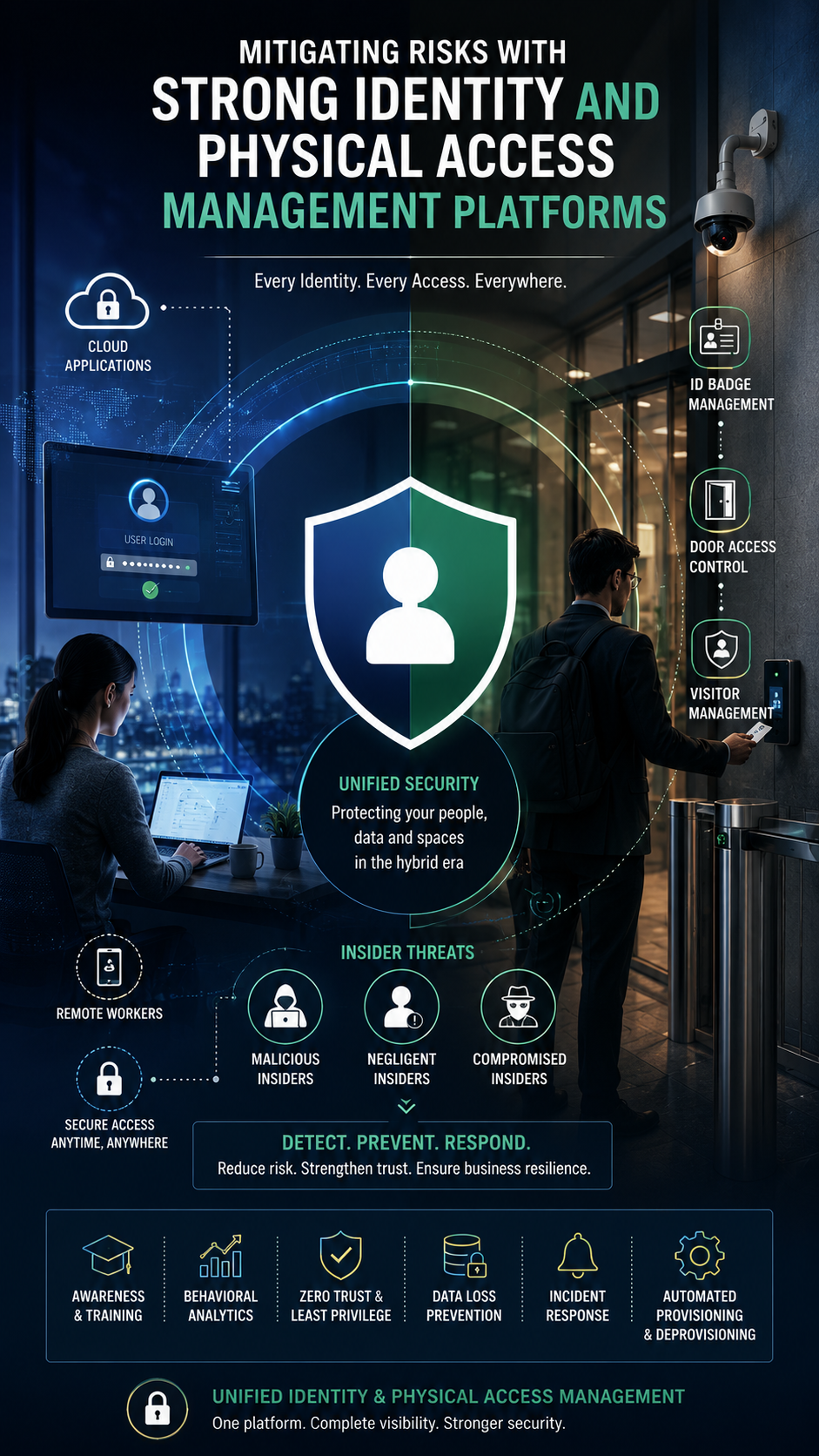
Prevention Techniques: The Role of Robust Identity and Physical Access Management Platforms
Effective mitigation requires a layered, proactive approach combining people, processes, and technology:
Education and Awareness: Regular training on phishing, data-handling best practices, and reporting suspicious activity. Foster a culture of shared responsibility.
Behavioural Monitoring and Analytics: User and entity behaviour analytics (UEBA) to flag anomalies in real time.
Least Privilege and Zero Trust: Grant access only as needed, with continuous verification—regardless of location.
Data Loss Prevention (DLP) and Endpoint Controls: Block unauthorized exfiltration across devices and networks.
Incident Response Plans: Clear protocols for rapid containment, including immediate access revocation.
Central to success are enterprise-grade Identity and Access Management (IAM) and Physical Access Management (PAM or Physical Identity and Access Management) platforms. Modern solutions converge these into unified systems that:
Automate Provisioning and Deprovisioning: Instantly revoke digital credentials and physical badges upon role changes, terminations, or contract endings—eliminating “orphaned” access that insiders exploit.
Correlate Physical and Digital Signals: Link badge swipes, biometrics, and location data with login activity, VPN usage, and data transfers. Unusual office entry paired with off-hours cloud downloads triggers alerts.
Enforce Multi-Factor Authentication (MFA) and Biometrics: Across both physical entry points (e.g., facial recognition at doors) and digital logins, reducing credential-stuffing risks.
Support Hybrid Workflows: Manage fluctuating access for remote/hybrid staff, contractors, and visitors with role-based policies and just-in-time access.
Deliver Compliance and Auditing: Centralized logs for SOX, GDPR, and other regulations, with AI-driven risk scoring.
Platforms that integrate IAM with physical access control systems (PACS) create a single source of truth for identity. This holistic view dramatically reduces mean time to detect and contain threats turning reactive firefighting into proactive prevention. Organizations adopting these integrated solutions report fewer incidents and faster resolution, as early behavioural signals (physical or digital) allow intervention before damage occurs.
Conclusion: Building Resilience in the Hybrid Future
Insider threats will not vanish as hybrid work becomes the norm they will evolve. The combination of rising costs (tens of millions annually for many enterprises), surging identity theft, and the physical-digital convergence demands more than patchwork fixes. Enterprises must invest in robust, integrated Identity and Physical Access Management platforms that treat every user, device, and door as part of a unified security fabric.
By embracing zero-trust principles, real-time correlation, and automated controls, organizations can transform their greatest vulnerability the trusted insider into their strongest line of defence. In the hybrid era, security is no longer about locking the perimeter. It’s about knowing exactly who is inside, why they are there, and what they are doing physically and digitally at every moment. The future belongs to those who secure identity holistically, from badge to byte.
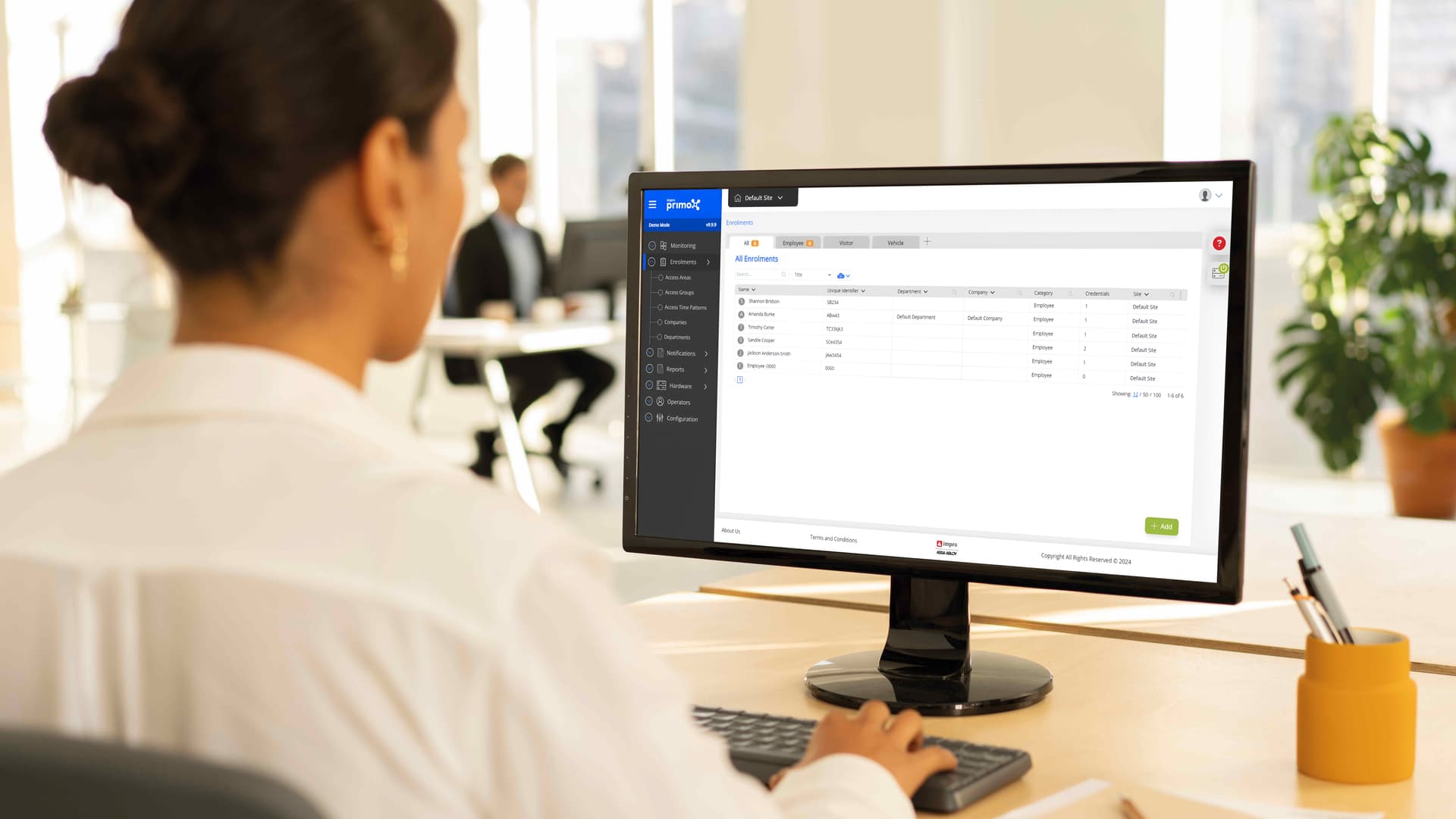
Every organization needs protection against physical and cyber threats. Workflow efficiency also benefits when security is digitalized and connected seamlessly with other business software and systems. Primo, part of the suite of Digital Access Solutions from ASSA ABLOY, brings this intelligent control with intuitive digital access software designed to grow and adapt as a business’ needs evolve.


Matrix Comsec receives the Gujarat Best Employer Brand Award 2026, reinforcing its commitment to employee development, innovation, inclusion, and organisational growth.