


Why Cyber-Physical Convergence Is Becoming an Enterprise Risk and Resilience Priority ?
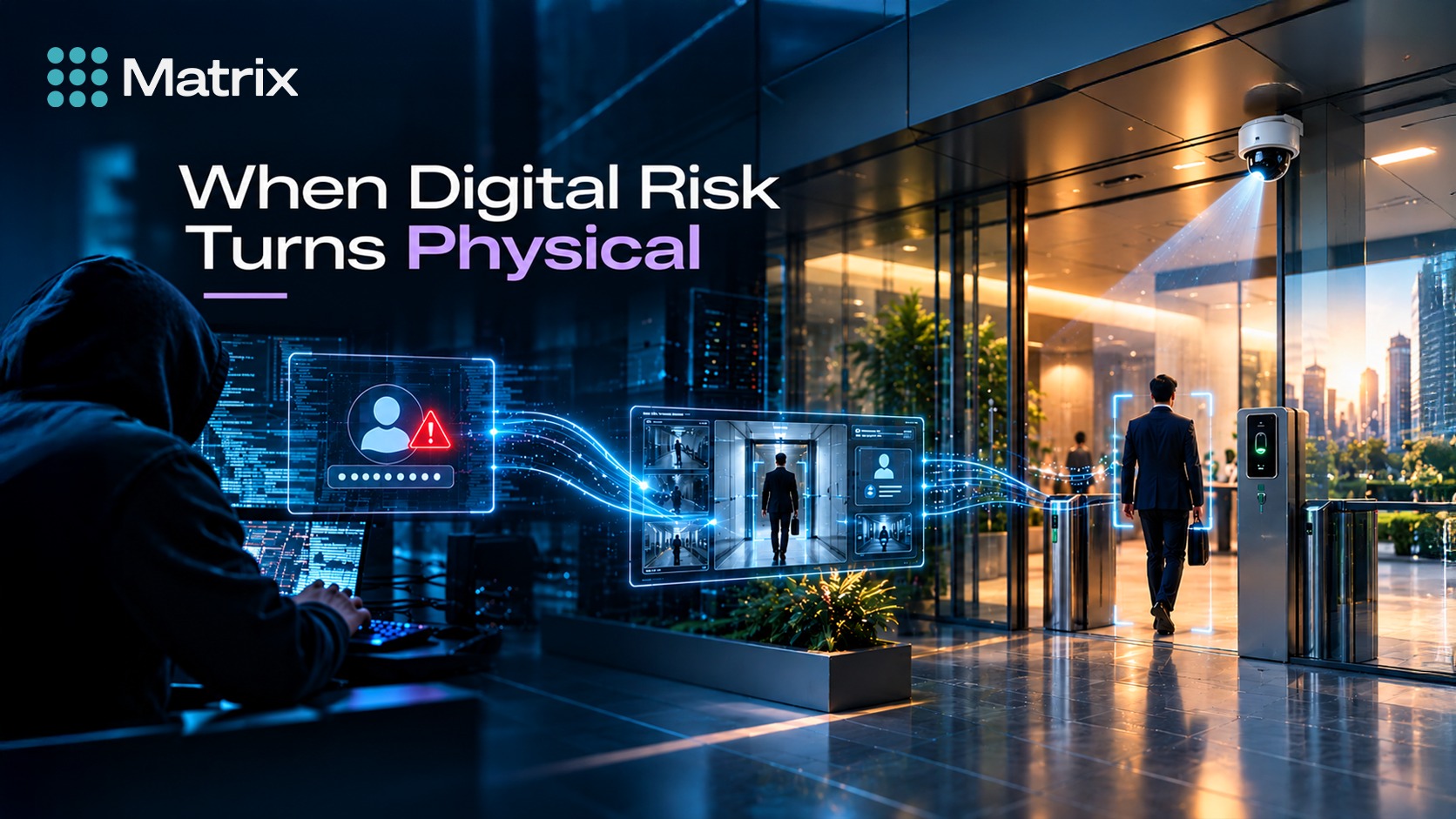
A credential is compromised online. Minutes later, it is used to enter a restricted facility. The access control system records the event, video surveillance provides visual context, and the security team receives the information needed to investigate and respond.
What begins as a digital incident can quickly have consequences in the physical world ?
As physical security, IT infrastructure, connected devices, building systems, and enterprise applications become increasingly interconnected, this distinction matters. Cyber-physical convergence is no longer simply about connecting technologies. It is changing how enterprises must think about risk, responsibility, and operational resilience.
The Security Boundary Is Disappearing
Physical security was traditionally built around distinct systems. Video surveillance monitored spaces. Access control managed movement. Building systems controlled infrastructure. Cybersecurity, meanwhile, focused primarily on networks, applications, identities, and data.
Those boundaries are becoming increasingly difficult to maintain.
Modern enterprises operate across connected environments spanning access control, video surveillance, building automation, fire and safety systems, sensors, identity platforms, and other operational technologies. IP-based infrastructure, cloud platforms, AI, IoT, and open integration frameworks are enabling these systems to exchange information and coordinate actions.
The result is a shift from standalone systems towards integrated physical security environments.
The significance extends beyond technology architecture. As physical infrastructure becomes increasingly software-driven and network-connected, vulnerabilities, disruptions, and decisions within one environment can have consequences across another.
From Isolated Events to Enterprise Context
The value of convergence is not simply that multiple systems can communicate. It is whether the information exchanged enables better decisions.
Consider an unauthorized access attempt. The access control system identifies the denied credential while integrated video surveillance provides the corresponding visual context. Instead of separately examining access records and searching through recordings, teams can correlate the event, establish context, and initiate an informed response.
Extend this principle across an enterprise and the implications become broader.
Access control can interact with visitor management, video surveillance, fire and safety systems, elevators, building management platforms, and enterprise applications. Information that previously existed within individual systems can contribute to a more coherent understanding of an event.
This represents a transition from isolated event detection to contextual intelligence—supporting faster decisions, clearer accountability, and more coordinated response.
Convergence Changes More Than Technology
As systems converge, organizational responsibilities must evolve with them.
A network-connected camera, access controller, sensor, or building system is no longer only a physical security device. It is also an endpoint within a wider enterprise technology environment.
That creates questions extending beyond traditional functional boundaries. Who owns the security of a connected access controller? Who determines its access privileges and network policies? Who is accountable for software updates and vulnerability management? When an incident moves from the digital environment into the physical world, where does responsibility sit?
These are questions of governance, not simply integration.
Physical security, cybersecurity, IT, facilities, and operations increasingly need a shared understanding of system ownership, authentication, permissions, network architecture, monitoring, data protection, updates, and incident response.
The objective, therefore, is not to connect every system simply because integration is possible. Every integration should have a defined operational purpose, clear accountability, and appropriate security controls.
From Integration to Coordinated Response
This principle is already influencing the way integrated physical security systems are being engineered.
Matrix, for example, approaches video surveillance, access control, time-attendance, visitor management, and analytics as parts of a cohesive environment rather than disconnected technologies. Its integration-ready architecture and configurable APIs enable interoperability with third-party systems—reflecting the broader movement towards environments where hardware, software, and enterprise applications can work together. The approach is consistent with Matrix's emphasis on unified architectures designed to simplify management, enhance compatibility, and improve operational efficiency.
But the measure of successful convergence is not the number of systems connected.
It is whether those connections reduce fragmentation, provide meaningful context, strengthen control, and enable more effective response.
That makes three questions increasingly important for enterprises: Does integration improve decision-making? Does connectivity introduce risk that is not adequately governed? And is accountability clear when multiple functions and systems intersect?
From Connected Infrastructure to Operational Resilience
Cyber-physical convergence ultimately represents more than a technology trend. It changes how enterprises need to approach security and operational resilience.
Video surveillance generates more than recordings. Access control generates more than entry records. Sensors generate more than alarms. When these systems exchange relevant information securely, they can provide a clearer understanding of what is happening across an enterprise and enable teams to respond with greater context.
The next phase of physical security will therefore not be defined simply by adding more cameras, readers, sensors, or software. It will be shaped by how intelligently, securely, and reliably these systems work together.
The question is no longer simply whether physical and digital systems will converge. They already are. The more consequential question is how deliberately that convergence is being governed.
Enterprises that approach it with the same discipline applied to operational and cyber risk can move beyond connected infrastructure towards something more valuable: greater visibility, clearer accountability, coordinated response, and stronger operational resilience.
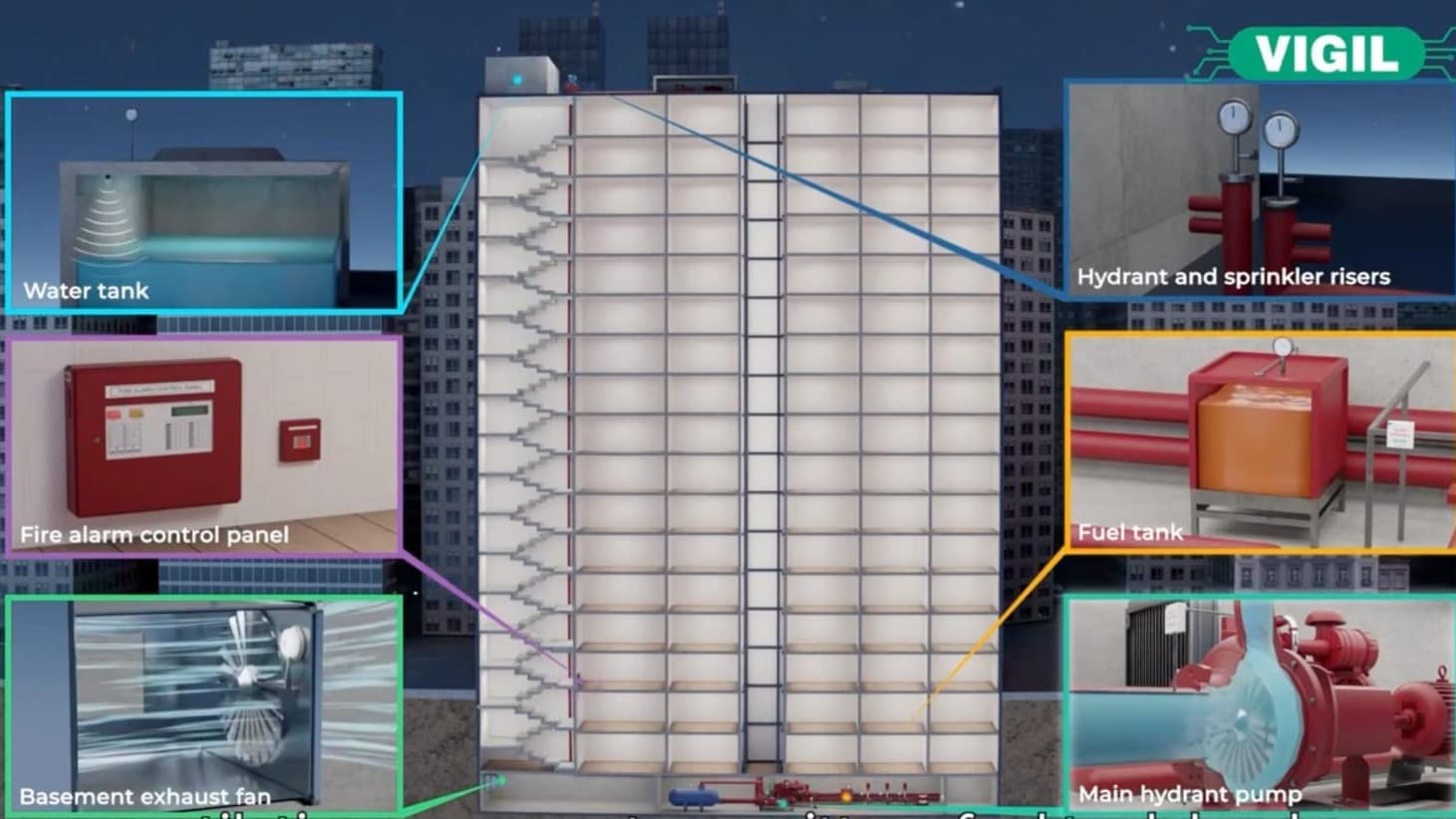
India rewrote the rules of digital payments and the world followed. Its fire services in Delhi and Maharashtra may have just done the same for fire safety. BY ELIXIR ENGINEERING PVT. LTD.

Every organization needs protection against physical and cyber threats. Workflow efficiency also benefits when security is digitalized and connected seamlessly with other business software and systems. Primo, part of the suite of Digital Access Solutions from ASSA ABLOY, brings this intelligent control with intuitive digital access software designed to grow and adapt as a business’ needs evolve.