


By Madan Bandodkar, Safety professional.

Madan Bandodkar
Safety Professional
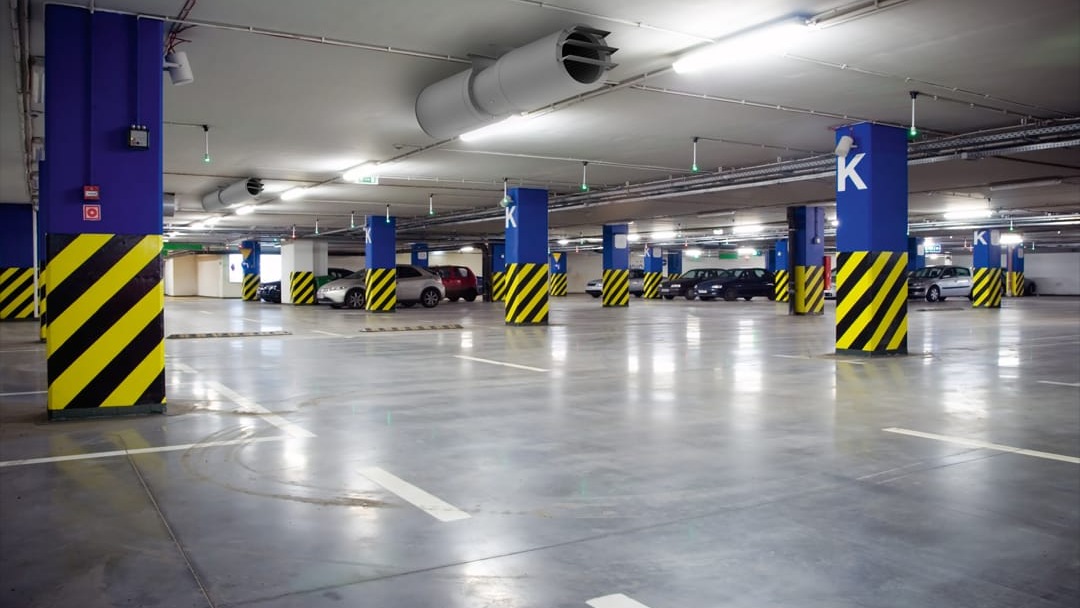
In the complex ecosystem of high-rise commercial architecture, basement parking fire safety is often treated as a peripheral concern. However, with the increasing density of vehicles and enclosed spaces, it is a critical fire safety component. A common point of confusion among MEP consultants and fire safety engineers involves the integration of mechanical smoke extraction fans with fire detection and suppression systems, specifically under the guidelines of the National Building Code (NBC) Part 4.
The Regulatory Interpretation
A careful reading of NBC Part 4, Table No. 7, reveals a significant detail: Smoke or heat detectors are generally not required in basements. When combined with the code’s guidance on integrating mechanical extraction systems with water flow switches (sprinklers), we arrive at a clear strategic conclusion: Smoke extraction fans should not be triggered by smoke or heat detectors.
Despite this, we often see installations where smoke detectors in basement parking areas are hard-wired to activate extraction fans immediately upon detection. This is a practice that needs urgent re-evaluation.
The Danger of Premature Activation
While it may seem intuitive to activate ventilation as soon as smoke is sensed, the physics of fire tells a different story.
The Incipient Stage Hazard: Smoke and heat detectors are designed to detect fires at their "incipient" or early stage. At this point, the fire is often small.
The Ventilation Paradox: If an extraction fan is triggered at the incipient stage, the sudden introduction of forced airflow can act as a catalyst. Instead of clearing smoke, the induced air current can provide fresh oxygen to the fire, causing it to grow rapidly before suppression efforts have even begun.
By prioritizing fan activation based on detection alone, we risk turning a manageable incident into a large-scale fire by "feeding" the combustion process.
The Case for Flow-Switch Integration
The NBC specifically points toward using flow switches to trigger extraction fans. This is not merely a bureaucratic requirement; it is a tactical engineering decision.
When a flow switch activates, it serves as confirmation that the sprinkler system has opened and a suppression event is underway. In this scenario:
Active Cooling: The sprinkler system is already engaged in cooling the area.
Managing Residual Smoke: The primary purpose of the extraction fan shifts from "smoke control" to "smoke removal." Since the fire is being suppressed, the goal is to prevent the accumulation of residual smoke, which can obscure visibility and harm responding fire personnel.
By linking extraction fans to flow switches, we ensure that ventilation begins only when the suppression process is active, thereby eliminating the risk of fueling an unsuppressed fire.
Conclusion: Designing for Safety
For fire safety professionals, the directive is clear. We must design our basement MEP systems to follow the logic of the NBC: Smoke extraction should be a post-suppression operation, not a pre-suppression ventilation event.
Relying on flow switches ensures that we are not prematurely introducing oxygen into a fire zone. It is time for the industry to move away from detector-based fan activation in basements and embrace the safety-first approach of flow-switch integration.
Article Contributed by: Sateja Naik, Manager, Firetech Equipment & Systems Pvt. Ltd.

Maharashtra has written the world’s most practical fire-monitoring rule. The question now is whether building owners will read it properly.

Installing a fire system is easy. Keeping it alive is the real engineering. Because a fire never sends a warning — and when it comes, your system gets one chance to work. At Northern Star Engineering, that chance is now in your pocket.

Safety Professional